
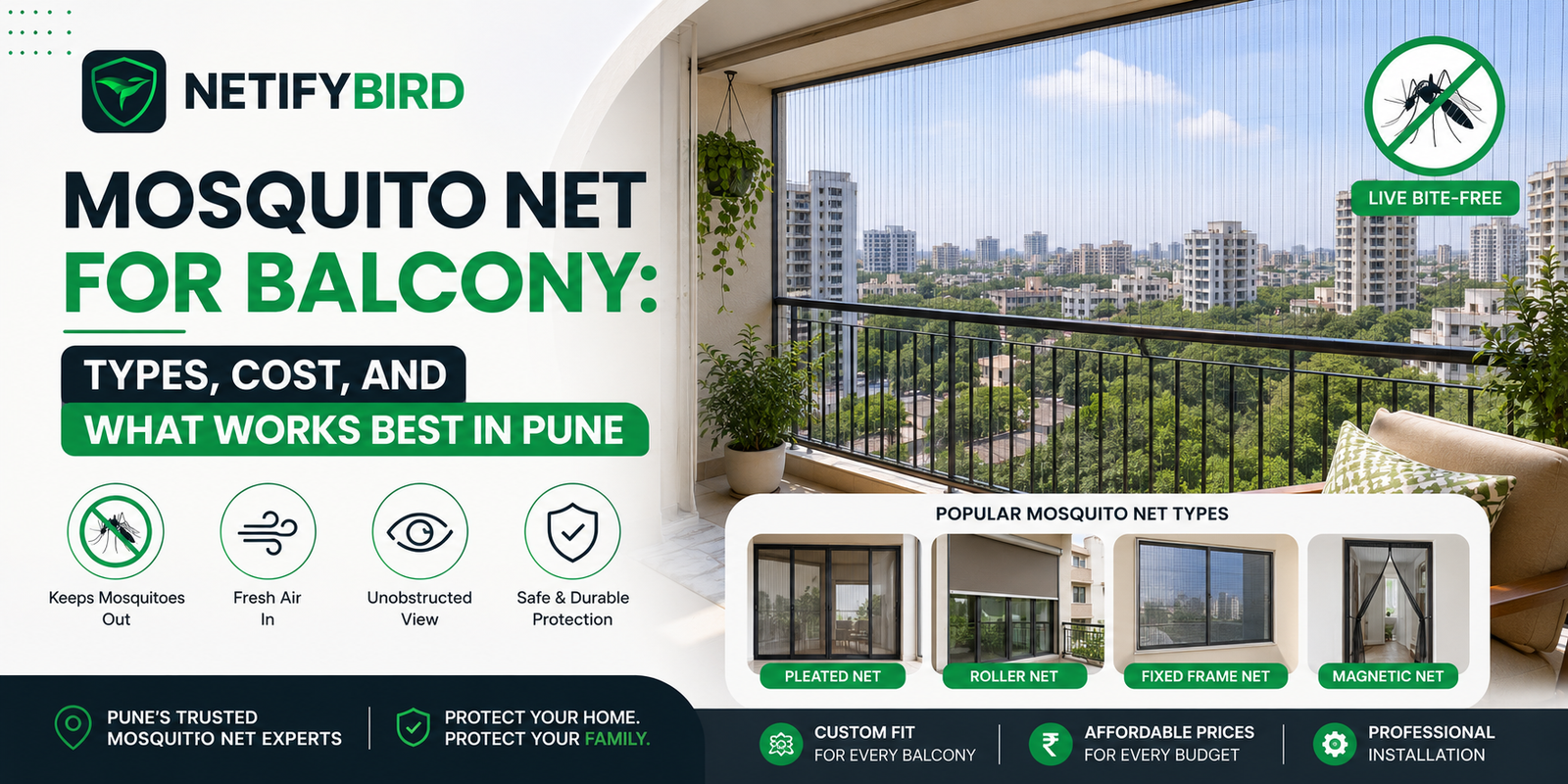
Pune’s evenings are made for open balconies — until mosquitoes show up right as the weather cools down. Between monsoon standing water and the general climate, mosquito activity is a near-constant issue for most homes here, and keeping windows and balconies shut all evening isn’t much of a solution. A properly fitted mosquito net for balcony use solves this without sacrificing airflow or your evening breeze.
This guide walks through the different types available, what typically affects cost, and how to choose the right one for your specific balcony or window setup.
Why a Proper Mosquito Mesh Matters More Than a Quick Fix
Plug-in repellents and sprays only work in short bursts and need constant reapplication. A physical mosquito mesh, fitted properly across your balcony or window opening, works continuously without any maintenance beyond occasional cleaning. It’s a one-time installation that solves the problem permanently, rather than a recurring purchase that only partially works.
Beyond mosquitoes, a good window mesh also keeps out flies, moths, and other small flying insects — genuinely useful during Pune’s monsoon months when insect activity tends to spike noticeably.
Types of Mosquito Nets for Balconies and Windows
Not all mosquito mesh is fitted the same way, and the right type depends on how you use the space and how often you need to open and close it.
- Magnetic mosquito net. This is one of the most popular choices for balconies and windows that get opened and closed regularly. The mesh is fitted with a magnetic strip along the edges, so it snaps shut automatically after you walk through, without needing to slide or unlatch anything. It’s a good fit for doors and frequently used balcony openings where convenience matters more than a fixed barrier.
- Sliding mosquito net. Fitted onto a track alongside your existing window or door, a sliding mesh panel moves smoothly open and shut, similar to how a sliding door works. This is a strong option for larger balcony openings or sliding glass doors, since it covers a wide span without needing to be removed entirely.
- Velcro mosquito net. A lightweight, removable option that attaches around the window or balcony frame using velcro strips. It’s more budget-friendly and easier to install without drilling, though it’s generally better suited to smaller windows rather than large balcony openings, since velcro doesn’t hold up as well under repeated daily use on wider spans.
- Fiberglass mosquito net. A softer, more flexible mesh material that’s easy to fit into various frame types. It’s a solid all-purpose option, though it’s slightly less durable than metal mesh over many years of exposure.
- SS mesh (stainless steel mosquito net). The most durable option, typically mounted on an aluminum frame. Stainless steel resists corrosion, doesn’t sag over time, and holds up well to Pune’s monsoon humidity and summer heat, making it a strong long-term choice for balconies that see heavy daily use.
Which Type Should You Choose?
If you walk in and out of your balcony frequently throughout the day, a magnetic mosquito net is usually the most convenient, since it closes itself automatically. For wide sliding doors or large balcony openings, a sliding mesh panel tends to give better coverage without constant adjustment. If you’re looking for a quick, low-cost fix for a smaller window, a velcro-fitted mesh is easy to install and remove as needed. And if you want something that will genuinely last for years without replacement, stainless steel mesh on an aluminum frame is the most durable choice, even though it typically costs more upfront.
What Affects Mosquito Mesh Price
Mosquito mesh price varies based on a few consistent factors:
- Material choice. Stainless steel mesh generally costs more than fiberglass or standard aluminum wire mesh, but it also lasts considerably longer — often eight to ten years compared to a shorter lifespan for lighter materials.
- Frame type. Sliding and magnetic systems, which involve tracks or additional hardware, typically cost more than a simple velcro-fitted panel, since there’s more material and precision fitting involved.
- Size of the opening. Larger balcony doors or window spans naturally require more material and a sturdier frame to hold the mesh without sagging, which affects the total cost.
- Number of openings. A single window is a quick, affordable job. A full balcony with multiple windows and a sliding door will cost more overall, though pricing per opening often becomes more efficient when done together in one visit.
- As with most netting work, getting an accurate mosquito mesh price really depends on someone seeing your specific windows and frames — a phone estimate rarely accounts for frame condition, opening size, or which type of mesh best suits your setup.
Installation: What to Expect
A typical mosquito net installation for a single balcony or a couple of windows is usually completed within a few hours. The installer measures your exact frame dimensions, fits the mesh or track precisely to avoid gaps at the edges, and tests that sliding or magnetic mechanisms open and close smoothly before finishing up. For sliding or magnetic systems, precise measurement matters more than with a basic velcro option, since even a small gap in fitting can leave room for mosquitoes to get through — defeating the purpose of the installation.
Combining Mosquito Mesh With Other Balcony Protection
If you’re already thinking about a mosquito mesh, it’s worth considering what else your balcony might need at the same time. Many homes end up wanting bird netting for pigeons alongside mosquito protection, and if you have young children, a proper safety net is often part of the same conversation. If you’re also weighing pigeon net options, our guide to pigeon net types and benefits covers the same kind of type-by-type comparison for bird protection.
Getting the Right Fit for Your Home
Every balcony and window setup is a little different — frame material, opening size, and how often you use the space all affect which mosquito net type makes the most sense. Rather than guessing from measurements alone, a quick site visit lets someone assess your exact frames and recommend the right mesh and mounting style, so you get a clean, gap-free fit rather than a generic panel that doesn’t quite match your window.
Our balcony safety net services cover mosquito mesh alongside bird netting and child safety nets, with a free site inspection to help you figure out exactly what your balcony needs, whether that’s mosquito protection alone or a combined setup.
Final Thoughts
A mosquito net for balcony use is one of those upgrades that quietly improves daily life — no more mosquito bites in the evening, no more shutting the balcony door to keep bugs out. Whether magnetic, sliding, velcro, or stainless steel mesh suits you best comes down to how you use your space and how long you want the installation to last. A proper site visit remains the most reliable way to get an accurate price and the right fit for your specific windows.
Frequently Asked Questions
Stainless steel (SS) mesh mounted on an aluminum frame typically lasts the longest, often eight to ten years, since it resists corrosion and holds up well to monsoon humidity and sun exposure.
It depends on your usage. Magnetic nets are more convenient for frequently used openings since they close automatically, while sliding nets work better for wide balcony doors or large openings that need full coverage.
Yes. Velcro-fitted mosquito nets attach around the window frame without drilling, making them a good option for renters or smaller windows, though they’re less durable than magnetic or sliding systems for daily heavy use.
No. Quality mosquito mesh, whether fiberglass or stainless steel, uses a fine weave that allows air and light to pass through freely while still blocking mosquitoes and small insects.
Mosquito mesh price depends on the material chosen, frame type (magnetic, sliding, or velcro), and the size and number of openings. A free site visit gives the most accurate quote based on your actual windows and balcony layout.