
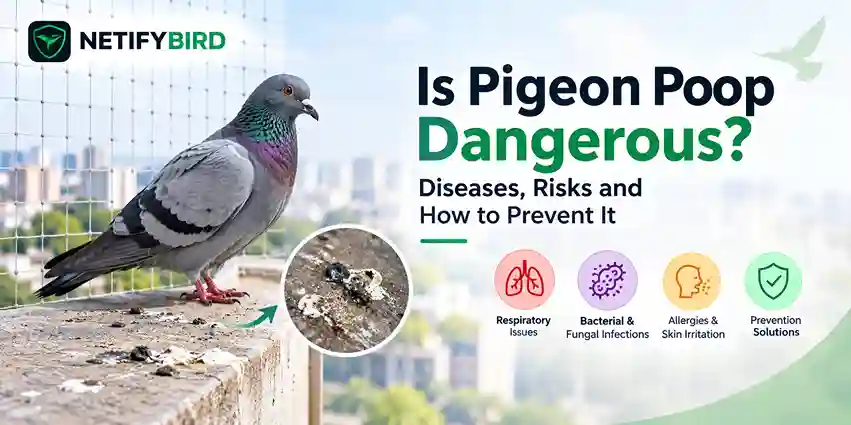
Yes, pigeon poop can be dangerous. Dried droppings turn to dust, and breathing it in can cause lung infections and allergic reactions. Fresh droppings on an open railing are a smaller concern. The real risk is a buildup of droppings in a sheltered spot such as a balcony, AC ledge or duct, where pigeons keep returning.
If pigeons are roosting at your home, this guide explains the health risks, who is most affected, what the droppings do to your property, and the permanent way to stop them.
Is Pigeon Poop Dangerous to Humans?
Pigeon droppings can carry fungi and bacteria. The main route of exposure is inhaling dried dust, not touching a single dropping. Most healthy people who are briefly near fresh droppings outdoors are at low risk. The concern grows when droppings pile up near windows, balconies and ventilation points and dry out, because disturbing them releases dust into the air.
Diseases Caused by Pigeon Droppings
These are the main pigeon poop diseases. In most cases, disease from pigeon droppings starts when dried droppings and feathers turn to dust and are breathed in.
Histoplasmosis
A fungal lung infection caused by a fungus that grows in accumulated bird droppings. It spreads when the dried dust is disturbed and inhaled, and it mainly affects the lungs.
Cryptococcosis
A fungal infection that usually affects the lungs after spores are breathed in. In people with weak immunity, it can spread to other parts of the body, including the nervous system.
Psittacosis
A bacterial infection that passes from birds to people through dried droppings or feather dust. It causes flu-like symptoms such as fever, headache and a dry cough.
Hypersensitivity Pneumonitis (Pigeon Lung)
An allergic reaction to proteins in pigeon droppings and feathers. Repeated exposure can cause lasting lung inflammation and, over time, scarring.
Salmonella
A bacterial infection that spreads when you touch droppings and then your mouth or food. Washing your hands thoroughly after any contact lowers the risk.
Who Is at Higher Risk From Pigeon Droppings?
The people most affected are:
- Children and older adults
- People with asthma, COPD or other lung conditions, who can get worse symptoms after exposure
- People with weak immune systems, such as those on cancer treatment or after an organ transplant
If someone in your home is in one of these groups, don’t ignore pigeons nesting on your balcony. See a doctor if you develop a persistent cough, fever or breathing trouble after exposure to droppings.
Can Pigeon Droppings Damage Your Home?
Yes. Droppings are acidic, and over time they can stain and corrode paint, metal, stone and roofing. Large buildups can also block drains and gutters, make surfaces slippery, and attract pests such as mites. In Pune, where balconies and terraces are used daily, this means constant cleaning and wear on railings, AC units and flooring.
Why Pigeons Keep Coming Back to Balconies and AC Ledges
Pigeons look for sheltered, ledge-like places to rest and nest. Covered balconies, AC outdoor-unit ledges, ducts and terraces suit them perfectly. Once a pigeon finds a safe spot, it usually returns every day and others follow, which is why the droppings build up so quickly.
How to Clean Pigeon Droppings Safely
If you need to clear droppings, wet them with water or disinfectant first, wear gloves and an N95 mask, and never dry-sweep or vacuum. Bag the waste, wash your hands afterwards, and leave large buildups or AC vent areas to a professional.
How to Stop Pigeon Droppings for Good With Bird Netting
Cleaning removes today’s mess, but it doesn’t stop tomorrow’s. As long as pigeons can land on your balcony, the droppings return and you take the risk again. The most reliable fix is to block the space physically.
How Bird Netting Prevents Droppings
A properly fitted net stops pigeons from landing, roosting or nesting inside the protected space. With no birds entering, droppings don’t build up, and your balcony, duct or terrace stays clean and safe to use.
Where Bird Netting Works Best
- Open and covered balconies
- AC outdoor-unit areas and ducts
- Window openings and shafts
- Terraces and common areas in housing societies
If you have an apartment balcony, a pigeon net for balcony is the most common solution, and our guide explains the types and what to check before you buy.
What to Check Before Installing
- Mesh and material: choose a UV-stabilized net suited to Pune’s strong sun and monsoon.
- Fixing and tension: a loose net or small gaps let pigeons back in.
- Existing nests: have an active nest assessed before sealing the area.
- Access: you should still be able to reach windows, drains and AC units for servicing.
For a site inspection and installation, our bird netting in Pune service covers measurement, fixing and a final check for gaps. To get started, send us photos of your space for a free bird net quote.
Frequently Asked Questions
Yes, it can be. Dried droppings can carry fungi and bacteria, and breathing in the dust is the main risk. A small amount of fresh droppings outdoors is lower risk, but buildups near balconies and windows should be taken seriously.
Diseases linked to pigeon droppings include histoplasmosis, cryptococcosis, psittacosis, hypersensitivity pneumonitis (pigeon lung) and Salmonella infection.
It can, mainly if you breathe in dried dust or touch droppings and then your mouth or food. Children, older adults and people with lung problems or weak immunity are most at risk.
The most reliable method is to block pigeons from landing there. A properly installed bird net on an open balcony keeps them out and stops droppings from building up.
Some people believe a bird dropping landing on you brings good luck. That is a cultural belief and has no effect on health, so droppings at home should still be dealt with.